Tā Tā For Now
The Chinese pronoun 他 (U+4ED6) was originally a gender-neutral, third-person pronoun. Over a century ago, Chinese linguist 劉半農/刘半农 created a female third-person pronoun, the character 她 (U+5979), by replacing the radical 人, meaning “person,” with 女, which means “woman.”
The original pronoun is now decidely male, leaving non-binary and other gender-diverse people without many good options. Never underestimate the resourcefulness of people to adapt language to their own circumstances, though! Two alteratives have been widely used over the last couple of decades:
- TA, literally just the shared pronounciation of the above characters, written in Latin characters;
- X也, in which the pronoun’s radicals have been decomposed, and the left one replaced with the Latin character X, for X-gender.
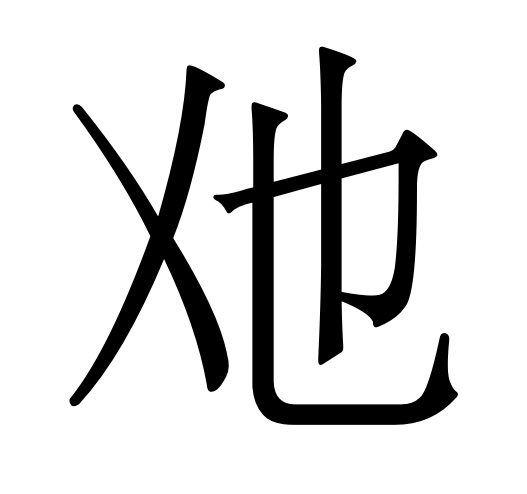
The latest version of Unicode—version 17.0—came out last September. Its CJK Unified Ideographs Extension J code block contains a new ideograph inspired by X也: (U+323BF). It uses 乂 for its left radical, inspired by the Latin character X.
Not many fonts have added it yet, so you probably see your font’s missing glyph character instead of the real thing. Don’t worry, it will see increased deployment over the next few years. Here’s the sample rendering of it from its code chart: